
Malawi’s K1.2tn Gold Smuggling Scourge: A Threat to Business Growth and Economic Stability
Key Business Points
- Malawi loses over $700 million annually through gold smuggling, equivalent to at least double the country’s tobacco earnings, highlighting the need for formal gold buying initiatives to curb illegal mining.
- The Malawi Mining Investment Company (Mamico) plans to become an active gold buyer, offering competitive prices to artisanal small-scale miners and providing a designated market for them to sell their gold.
- Formalizing the gold market is crucial to maximizing returns for the country, with experts emphasizing the need for miners to obtain licenses and sell their gold to established markets, making it easier for authorities to track proceeds and boost foreign exchange earnings.
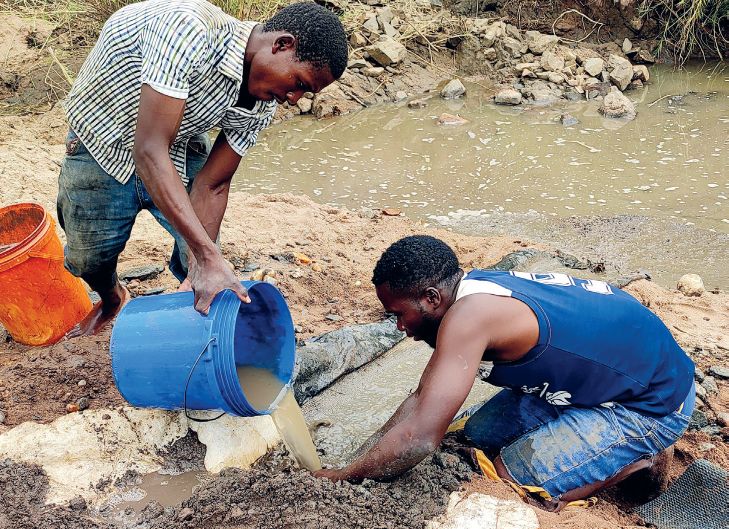
The gold smuggling phenomenon in Malawi is a pressing issue that severely affects the country’s foreign exchange earnings. A recent study by Mamico has revealed that the country loses potential revenue in excess of $700 million annually, with 81 illegal gold mining sites nationwide. This staggering figure is equivalent to at least double what Malawi earns from tobacco, its main foreign exchange earner. Gold miners are largely involved in informal and small-scale mining activities, selling their gold to foreign merchants who smuggle it out of the country, taking advantage of higher prices in neighboring markets.
According to geoscience expert Ignatius Kamwanje, the informal gold mining and trading has been worsened by the increasing participation of foreigners. He emphasizes the need to formalize the market, allowing miners to sell their gold to established markets and enabling authorities to track proceeds. Mamico’s initiative to become an active gold buyer is seen as a positive step, with plans to open spots where gold can be bought at competitive prices, providing convenient markets for local miners.
Geologist Paul Mvula applauds the formal gold buying initiative, but notes that the Reserve Bank of Malawi (RBM) could have bought more gold if illegal mining was curbed. With only 540 kilogrammes of gold valued at $70 million bought by the RBM since 2023, there is a significant opportunity for growth in the mining sector. The Mining and Minerals Regulatory Authority is struggling to curb illegal mining, citing the complexity of the issue and the reluctance of some miners to obtain licenses.
As Malawi 2063, the country’s long-term development plan, identifies mining as a key sector for growth, efforts to formalize the gold market and boost foreign exchange earnings are crucial. With Mamico expected to take over the gold buying responsibility from the RBM, the company’s active involvement in gold procurement is anticipated to make a positive impact on the mining sector. As the sector contributes roughly one percent to the country’s gross domestic product, experts believe that the contribution will grow with the restart of Kayerekera Uranium Mine and progress in various mining projects. Kupanga bizinesi, or doing business, in Malawi’s mining sector is expected to become more formalized and profitable, offering opportunities for local entrepreneurs and investors.
What are your thoughts on this business development? Share your insights and remember to follow us on Facebook and Twitter for the latest Malawi business news and opportunities. Visit us daily for comprehensive coverage of Malawi’s business landscape.

- “Tsesa, to support Micro, Small and Medium Enterprise growth, The Times Group partners with UNDP #BuildingTheEconomy” This title targets an audience of business owners, entrepreneurs, investors and professionals in Malawi, and is focused on the business impact and potential for business growth. It also avoids using variations of overused words like “unlock”, “boost” etc. - March 20, 2026
- Protect Your Profits: Combatting Counterfeits in Malawi’s Market - March 20, 2026
- Investment in Women Farmers Drives Economic Growth and Sustainability in Malawi - March 20, 2026