
Revitalizing Malawi’s Economy: Igniting Growth, Creating Opportunities
Key Business Points
- Malawi’s economy is not generating enough high-quality jobs to absorb the 270,000 young people entering the job market every year, with only 30,000 formal jobs created annually.
- There is a misalignment between the education system and the job market, leaving young people lacking the required skills, and authorities are urged to strengthen the connection between education, skills development, and employment.
- Implementing low-cost, high-impact actions such as short modular programs that combine life skills, entrepreneurship, digital literacy, and financial literacy can help young people transition into productive self-employment and wage employment.
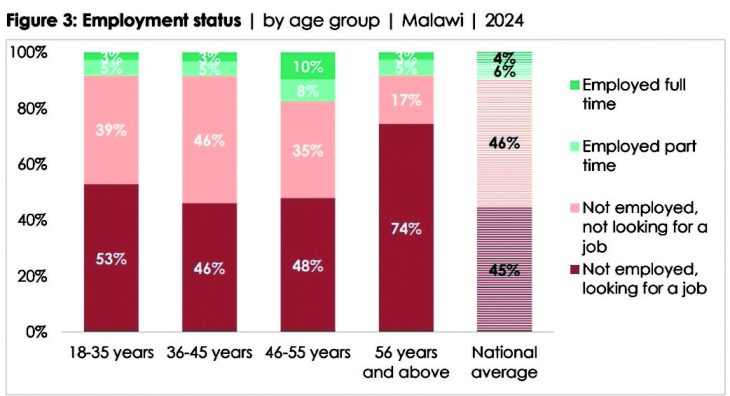
The Malawian job market is facing significant challenges, with a large number of young people entering the market every year, only to find limited opportunities. According to a policy note drawn by the United Nations, the World Bank, and the African Development Bank (AfDB), the country’s economy is not generating enough high-quality jobs to absorb the influx of new workers. This has resulted in a skills mismatch, where many young people graduate with diplomas but lack the skills employers need. The note emphasizes the need to strengthen the connection between education, skills development, and employment to accelerate job creation.
The education system is cited as a key area that needs improvement, with the current curriculum not well aligned with labor market demand. This has led to a situation where many young people are not sufficiently equipped for the job market, as highlighted by recent Afrobarometer research findings. The research shows that the youth most commonly report a lack of adequate training or preparation as the top barrier to employment, a concern shared across all age groups.
To address this challenge, the policy note suggests the development and expansion of short modular programs that combine life skills, entrepreneurship, digital literacy, and financial literacy with curricula tailored to local value chains. This approach is in line with promises made in the Democratic Progressive Party Manifesto, which emphasizes the need to link the education system with the job market to develop the needed skills.
Finance Minister Joseph Mwanamvekha has also emphasized the need for a comprehensive approach to address the job market challenge, stating that the National Economic Recovery Plan being developed will cover all aspects of the economy, including the job market. The plan will set timelines for achieving specific goals and assign responsibilities to specific duty bearers, including a person responsible for implementation. As the country looks to address the job market challenge, malawian entrepreneurs and business owners can play a critical role by providing ujira (employment) opportunities and supporting the development of relevant skills among young people. By working together, Malawi can create a more vibrant and inclusive economy that benefits all citizens.
What are your thoughts on this business development? Share your insights and remember to follow us on Facebook and Twitter for the latest Malawi business news and opportunities. Visit us daily for comprehensive coverage of Malawi’s business landscape.

- Mwapata Institute Maps Profitable Pathways in Malawi’s Soybean Value Chain - September 20, 2026
- TNM Introduces Tailored Packages to Elevate Malawi Business Performance - September 20, 2026
- Malawi’s Investment Ambitions Outpace Available Capital - September 20, 2026