
Revitalizing Malawi’s Export Potential: Catalysts for Growth
Key Business Points
- Malawi’s produce exports, particularly for soya beans, legumes, groundnuts, and macadamia nuts, have significant unrealised export potential of up to 70 percent, hindering the country’s exports growth.
- The lack of value addition and production deficiencies are major factors contributing to the unrealised export potential, with economists and business leaders calling for public-private dialogue to enhance value addition and technology.
- The World Bank-funded Agricultural Commercialisation Project aims to promote production, which is expected to improve the situation in the near future, while the National Export Strategy II launched in 2021 focuses on increasing made-in-Malawi products in regional markets.
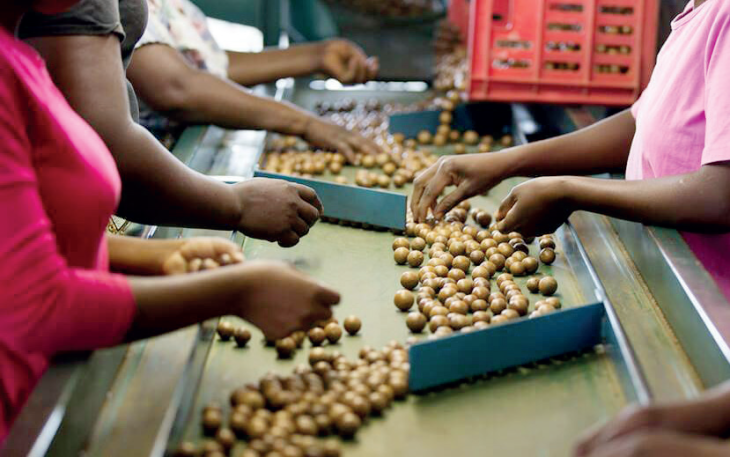
Malawi’s economy continues to face challenges in realizing its full export potential, particularly in the produce sector. According to the Malawi Investment and Trade Centre (Mitc) Export Map, the country’s most commonly grown legumes and oilseeds, such as soya beans, legumes, groundnuts, and macadamia nuts, have significant unrealised export potential of up to 70 percent. For instance, the realised exports of soya oilseed cake are only 28 percent of the $103 million export potential, leaving a huge unrealised potential of $74 million. Similarly, legumes and macadamia nuts have unrealised export potentials of $50 million and $3 million, respectively.
The high unrealised export potential is attributed to policy-related issues, such as export bans, which can hinder exporters from fulfilling signed contracts. First-level value addition is also lacking, making it difficult for Malawi to meet the demanded volumes and standards. As James Chimwaza, president of the Common Market for Eastern and Southern Africa (Comesa) Business Council, noted, "there is need for public-private dialogue that prioritises technology and enhances value addition." This dialogue can help address the production deficiencies and lack of value addition that are hindering the country’s exports growth.
Economist Paul Kwengwere believes that the World Bank-funded Agricultural Commercialisation Project will help promote production and improve the situation in the near future. However, the country’s cumulative trade deficit has jumped by 20 percent to $2.4 billion, with imports increasing to $3.27 billion and exports dropping to $875.4 million. The National Export Strategy II, launched in 2021, aims to achieve export competitiveness by increasing made-in-Malawi products in regional markets and ensuring import substitution. As Grace Mijiga Mhango, president of the Grain Traders Association of Malawi, said, "we believe this has remained the case because of policy-related issues."
To address these challenges, Malawi’s business community needs to focus on value addition and production capacity to meet the demand for its products. As the Chichewa business term "kutengera kwa njanji" (fulfilling contracts) suggests, exporters must be able to deliver on their contracts to build trust with international buyers. By addressing the policy-related issues and enhancing value addition, Malawi can unlock its full export potential and improve its trade balance. With the right strategies in place, Malawi’s produce exports can become a significant contributor to the country’s economic growth, creating opportunities for local entrepreneurs and investors.
What are your thoughts on this business development? Share your insights and remember to follow us on Facebook and Twitter for the latest Malawi business news and opportunities. Visit us daily for comprehensive coverage of Malawi’s business landscape.
